
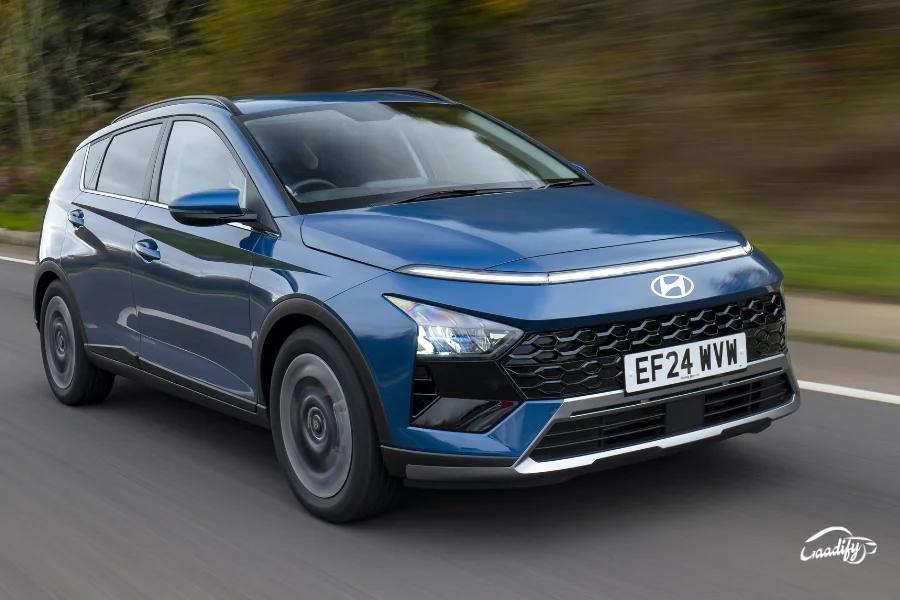
Hyundai is developing the new-generation Bayon SUV, known by the code name BC4. It is part of Hyundai’s plan to update its small SUV lineup around the world.
New spy photos show that the upcoming Bayon will have a more stylish and stronger SUV look instead of its current hatchback-like design.
The new Bayon is expected to be bigger and offer more cabin space. It will also come with improved technology, modern features, and better safety equipment.
Hyundai may also launch the new Bayon in India. It is likely to be placed above the Hyundai Venue in the company’s Indian SUV range.The Hyundai Bayon is a small SUV that will soon go on sale in India. It will fit into Hyundai’s lineup between the Exter and the Venue models. Because the car is still being tested, these details are based on what we know right now and might change before the car is officially released.
Hyundai Bayon Expected On-Road Price
| Variant | Expected Ex-Showroom Price | Expected On-Road Price* |
|---|---|---|
| Base | ₹10.00 lakh | ₹11.30–11.80 lakh |
| Mid | ₹12.00 lakh | ₹13.50–14.20 lakh |
| Top | ₹15.00 lakh | ₹16.80–17.80 lakh |
*On-road prices vary depending on the city, registration charges, insurance, and taxes.
Expected Mileage
- 1.0-litre Turbo Petrol: 18–20 km/l
- 1.2-litre Turbo Petrol (expected): 19–21 km/l
- Hybrid version (if launched): Up to 24–26 km/l (expected)
Hyundai has not officially announced certified mileage figures yet.
Expected Variants
- Base
- S
- SX
- SX(O)
- N Line (possible performance variant)
Variant names may differ when the SUV is officially launched.
Launch Date
Expected India launch: July–October 2026 (Q2 FY2027), depending on Hyundai’s rollout plans.
Hyundai Bayon Interior Features
The Hyundai Bayon is expected to come with a large touchscreen infotainment system placed in the center of the dashboard. This display will let you control music, navigation, phone calls, vehicle settings, and other functions with simple touch controls.
Instead of traditional analog gauges, the Bayon is likely to feature a fully digital driver’s display behind the steering wheel. This screen will show important driving information such as speed, fuel level, engine temperature, trip details, navigation directions, and safety alerts.
The SUV is expected to support wireless Android Auto and Apple CarPlay, allowing you to connect your smartphone without using a USB cable. Once connected, you can access your favorite apps, make hands-free calls, send messages, listen to music.
Hyundai may equip the Bayon with automatic climate control, which automatically maintains the cabin at your selected temperature.
Also Read:Vinfast VF 8
A wireless charging pad is expected to be available for compatible smartphones. Drivers and passengers can simply place their phone on the charging pad to recharge the battery while driving.
Higher variants of the Bayon may include ventilated front seats that use built-in fans to circulate cool air through the seat cushions.
The seats are expected to be covered in high-quality fabric on lower variants and premium leatherette on higher trims. These materials are designed to be comfortable, durable, and easy to maintain while giving the cabin a stylish and premium feel.
The Bayon is likely to offer ambient interior lighting that gently illuminates parts of the cabin, such as the dashboard, doors, or footwells.
Rear passengers are expected to benefit from dedicated air-conditioning vents placed behind the front center console. The SUV is expected to include several USB charging ports for both front and rear passengers. These ports allow everyone to charge smartphones, tablets, smartwatches.
Hyundai’s connected car technology is expected to provide smart features through a mobile app. Owners may be able to remotely lock or unlock the doors, start the engine, track the vehicle’s location, monitor vehicle health, receive maintenance reminders.
The Bayon is expected to offer a roomy rear cabin with improved legroom and comfortable seating for three passengers. The additional space allows rear occupants to stretch their legs more comfortably, making long-distance travel more relaxing for adults as well as children.
The SUV is expected to feature a large luggage compartment that provides plenty of storage space for suitcases, shopping bags, backpacks, and other travel items. The rear seats may also fold down to create even more cargo space when carrying larger .
Hyundai Bayon Exterior Features
The Hyundai Bayon is expected to feature a bold front grille that gives the SUV a strong and stylish appearance. The large grille is designed to improve airflow to the engine while creating a modern front-end design.
The SUV is likely to come with split LED headlamps, where the daytime running lights and the main headlights are placed separately.
The Bayon is expected to include LED daytime running lights that remain on while driving during the day. These lights improve the vehicle’s visibility to other road users and add a premium touch to the SUV’s front design.
At the rear, the Bayon is expected to feature stylish LED tail lamps with a modern design. These lights provide bright illumination when braking or driving at night, making the SUV more visible to vehicles behind.
The SUV is likely to ride on attractive dual-tone alloy wheels that combine two different colours for a premium finish. These lightweight wheels not only improve the vehicle’s appearance but also help provide better handling and stability while driving on different types of roads.
The Bayon is expected to come with roof rails that add to its SUV styling. These rails can also be used to carry additional luggage, bicycles, or roof-mounted storage boxes when fitted with compatible accessories, making the vehicle more practical for long trips.
A stylish shark-fin antenna is expected to replace the traditional long antenna. It gives the roof a cleaner and more modern appearance while providing reliable reception for radio, GPS, and other communication systems without affecting the vehicle’s aerodynamic performance.
The Bayon is likely to feature sporty front and rear bumpers with sharp lines and modern styling. These bumpers give the SUV a more aggressive and dynamic appearance while also helping to protect the vehicle from minor bumps and impacts during everyday driving.
Black body cladding around the wheel arches and lower body panels is expected to give the Bayon a rugged SUV look. This protective cladding also helps reduce visible scratches and minor damage caused by stones, mud, and rough road conditions.
The SUV is expected to include a rear roof spoiler that enhances both style and performance. The spoiler helps improve airflow over the vehicle, reduces aerodynamic drag, and gives the Bayon a sporty appearance.
The Hyundai Bayon is expected to offer high ground clearance, allowing it to drive comfortably over speed breakers, rough roads, and uneven surfaces without the underside of the vehicle scraping the ground.
The Bayon’s overall body is expected to feature a sleek aerodynamic profile with smooth lines and a well-shaped design. This helps reduce air resistance, which can improve fuel efficiency, provide better stability at higher speeds, and reduce wind noise inside the cabin. The streamlined design also gives the SUV a modern and premium appearance.
Safety Features
Expected safety equipment includes:
- Six airbags
- Electronic Stability Control (ESC)
- ABS with EBD
- Hill Start Assist
- Vehicle Stability Management
- Traction Control System
- TPMS (Tyre Pressure Monitoring System)
- Front and rear parking sensors
- Reverse camera
- 360-degree camera (top variants)
- ISOFIX child seat mounts
- All-wheel disc brakes (selected variants)
- Level-2 ADAS features such as:
- Forward Collision Avoidance Assist
- Lane Keep Assist
- Blind Spot Monitoring
- Adaptive Cruise Control
- Driver Attention Warning
1 thought on “2026 Hyundai Bayon: Price, Features, Specs & Launch Date”